Types of Collagen: I, II, III, Marine, Hydrolysed and Peptides

There are at least 28 types of collagen in the body, but supplements sell four words: type I, type II, marine and hydrolysed. Type I is skin and bone. Type II is cartilage. Marine describes the source, hydrolysed describes the processing — and the two are constantly confused with the types themselves.
The three types you will actually meet
If a product is aimed at skin it will be type I, usually with type III. If it is aimed at joints it should be type II. A joint product built on type I is not wrong exactly, but it is not the collagen that cartilage is made of.
| Type | Where it is in the body | What supplements use it for |
|---|---|---|
| Type I | Skin, bone, tendon, ligament — about 90% of the collagen in you | Skin elasticity and hydration, nails, hair, bone support |
| Type II | Cartilage, and almost nowhere else | Joint comfort and mobility |
| Type III | Skin, blood vessels, internal organs, usually alongside type I | Sold together with type I in beauty formulas |
Marine, bovine, porcine — that is the source, not the type
Marine collagen comes from fish skin and scales and is predominantly type I. Bovine collagen comes from cattle hide and bone and supplies types I and III, and bovine cartilage is the usual source of type II. Porcine is used in some products.
So "marine collagen" tells you where it came from and, indirectly, that it is mostly type I — which is why marine collagen is marketed for skin. It is not a fourth type, and a marine product is not automatically better; the fish origin matters for religious or dietary reasons and for allergy, not for potency.
Hydrolysed, peptides, undenatured — the processing
Hydrolysed collagen has been broken into small fragments so it can be absorbed. Collagen peptides is another name for the same thing. These are taken at large doses — typically 8 to 10 grams a day — and supply amino acids as raw material.
Undenatured type II is the opposite: collagen left intact and given in tiny amounts, around 40 mg a day. The proposed mechanism is immunological rather than nutritional. It appears in joint products specifically.
This is the single most useful thing to check on a label, because 40 mg and 10,000 mg on the same shelf are not a strength difference — they are two different approaches, and only one of them is meant to be a large number.
What this means when you are choosing
- Buying for skin: type I, often with type III. Marine or bovine both work; hydrolysed peptides at several grams a day.
- Buying for joints: type II. Either undenatured at a small dose or hydrolysed at a large one — but the label should tell you which.
- A label that says only "collagen complex" without a type is telling you less than it could, and that is worth noticing.
- A label that gives no milligram figure at all cannot be compared with any study, whatever else it says.
Frequently asked questions
Is there such a thing as vegan collagen?
Not really. Collagen is an animal protein. Products sold as plant collagen supply the cofactors your body uses to make its own — vitamin C, amino acids, zinc — which is a reasonable product, just not collagen.
Can one supplement cover skin and joints?
A product with both type I and type II can, in principle. Check that each is present at a dose that matches its own research rather than a token amount of each.
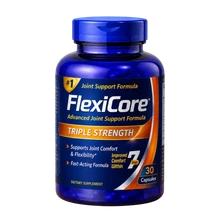
Which type is in FlexiCore?
Type II, alongside glucosamine, chondroitin and hyaluronic acid. The per-capsule amount is not published, so ask the seller if the exact dose matters to you.
General information, not advice about your situation. FlexiCore is a food supplement and is not a medicine. If you have a diagnosed condition or take prescription medicines, speak to a pharmacist or doctor before starting anything new.
More on collagen
Save 50%
FlexiCore — collagen type II for joints
30 capsules per pack · pay the courier on delivery · we call to confirm before dispatch.