Collagen for Skin or for Joints? They Are Not the Same Purchase

Most collagen sold in Nigeria is bought for skin, and most collagen research on skin uses type I peptides at several grams a day. Joints need type II. Same word on the front of the box, different molecule inside, different dose — and buying the wrong one is the most common collagen mistake.
What the skin evidence says
Hydrolysed collagen peptides, mostly type I, have been studied for skin hydration and elasticity at doses around 2.5 to 10 grams a day over eight to twelve weeks. Reviews report small but reasonably consistent improvements in hydration and elasticity.
This is the strongest part of the collagen evidence base, and it is why the category grew. If your goal is skin, this is the product family you want, and the honest expectation is a modest measurable change, not a transformation.
What the joint evidence says
Joint research splits into two approaches. Undenatured type II at about 40 mg a day has trials in knee discomfort. Hydrolysed peptides at 8 to 10 grams a day have trials in activity-related joint discomfort, mostly in athletes and active adults.
Effects are modest on average with wide variation between individuals, and the window is eight to twelve weeks. Nobody has shown collagen regrowing worn cartilage, and a product claiming that is selling something the science does not support.
How to tell which one you are holding
The partner ingredients are the quickest tell. Glucosamine and chondroitin next to collagen means the formula was built for joints. Biotin and vitamin C next to collagen means it was built for skin.
| Look for | Skin product | Joint product |
|---|---|---|
| Type | Type I, often with III | Type II |
| Typical dose | 2.5–10 g a day | 40 mg undenatured, or 8–10 g hydrolysed |
| Format | Powder or sachet, usually | Capsules, usually |
| Common partners | Vitamin C, biotin, hyaluronic acid | Glucosamine, chondroitin, MSM |
Where FlexiCore fits, and where it does not
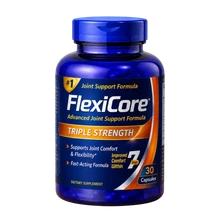
FlexiCore is a joint product. It pairs collagen type II with glucosamine, chondroitin and hyaluronic acid — the joint pattern described above, not the skin pattern.
So if you came here looking for collagen for your skin, this is the honest answer: FlexiCore is not the product for that, and we are not going to market it as one. Look for a type I hydrolysed peptide powder instead, and compare grams per serving rather than the size of the tub.
If you came looking for joints, then the type is right and the partner ingredients are the ones joint formulas are built from. What FlexiCore does not publish is the amount per capsule, and that is worth asking the seller before you buy.
Frequently asked questions
Will a joint collagen also help my skin?
A small undenatured type II dose almost certainly will not — it is 40 mg, far below any skin study. A large hydrolysed dose might, since the skin trials used peptides, but a joint capsule rarely carries several grams.
Is collagen better than eating protein?
For skin, the trials that show an effect used collagen peptides specifically rather than protein in general. For everything else, adequate total protein does most of the work.
Does collagen help with knee pain?
Trials show modest average improvements in joint discomfort, with considerable variation between people. It is not a painkiller, and a knee that is hot, red, badly swollen or waking you at night needs a doctor rather than a supplement.
General information, not advice about your situation. FlexiCore is a food supplement and is not a medicine. If you have a diagnosed condition or take prescription medicines, speak to a pharmacist or doctor before starting anything new.
More on collagen
Save 50%
FlexiCore — collagen type II for joints
30 capsules per pack · pay the courier on delivery · we call to confirm before dispatch.