Collagen Side Effects, Interactions and How to Take It

Collagen is well tolerated in trials, with mild digestive complaints the most common report. The real cautions are narrower than the internet suggests: allergy to the source animal, and the fact that joint formulas usually carry other ingredients that have their own interactions.
What is actually reported
Across trials collagen is well tolerated. The commonly reported effects are mild and digestive: a feeling of fullness, mild nausea, occasional loose stools, and for some people an aftertaste with unflavoured powders.
Serious adverse effects are rare in the published record. That is a genuine strength of the ingredient and worth saying plainly rather than burying it in caveats.
Who should check first
- Anyone allergic to fish or shellfish — marine collagen is fish-derived, and joint formulas often contain shellfish-derived glucosamine.
- Anyone on warfarin or another blood thinner — not because of the collagen, but because glucosamine, a frequent partner ingredient, may increase the effect.
- Anyone avoiding beef or pork for religious reasons — bovine and porcine sources are common and are not always stated prominently.
- Pregnant and breastfeeding women, and anyone under 18, for whom safety data is thin.
- Anyone with kidney disease should mention any high-protein supplement to their doctor.
Read the whole formula, not just the collagen
This is the point most articles miss. Collagen on its own has a clean profile. Joint formulas are rarely collagen on its own — they add glucosamine, chondroitin, MSM or hyaluronic acid, and the cautions attach to those.
When you check a product with a pharmacist, take the full ingredient list rather than saying "collagen". The interaction that matters is usually not the one on the front of the box.
How and when to take it
- Follow the pack directions first — they override any general guidance including ours.
- Time of day does not appear to matter. Consistency across weeks does.
- With or after food is gentler if your stomach is sensitive.
- Give it eight to twelve weeks before judging. Structural ingredients work slowly, and a verdict after five days measures your mood.
- Stop and see a doctor for a hot, red or badly swollen joint, for pain that wakes you at night, or for a joint that locks or gives way.
Frequently asked questions
Does collagen cause weight gain?
No. A typical serving is a few grams of protein — around 20 to 40 calories. Any weight change over a course of collagen came from somewhere else.
Can I take collagen with other supplements?
Usually yes. The combination worth checking is a joint formula alongside a blood thinner, because of glucosamine rather than the collagen.
How long can I keep taking it?
Trials have run up to a year without safety concerns. If three consistent months produce no change in whatever you chose to track, stopping is a reasonable decision.
General information, not advice about your situation. FlexiCore is a food supplement and is not a medicine. If you have a diagnosed condition or take prescription medicines, speak to a pharmacist or doctor before starting anything new.
More on collagen
Save 50%
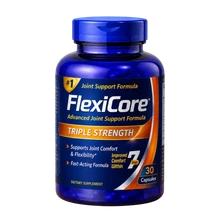
FlexiCore — collagen type II for joints
30 capsules per pack · pay the courier on delivery · we call to confirm before dispatch.