Collagen Type II for Joints: Undenatured vs Hydrolysed, and the Evidence

Collagen is the most abundant protein in the body and the scaffold cartilage is built on. Supplements come in two very different forms — undenatured type II at tiny doses and hydrolysed peptides at large ones — and that distinction matters far more than the word “collagen” on the front of a box.
What it is
Collagen is the most abundant protein in the human body and the scaffold that connective tissue is built on. Type II specifically is the collagen of cartilage — the smooth tissue that lets the ends of bones move against one another without grinding.
Production slows from the twenties onward, at roughly one per cent a year past forty. Smoking, heavy manual work, intensive sport and poor nutrition all speed that up. This is ordinary biology, not a disease, and it is the reason collagen is the ingredient joint formulas are usually built around.
Two forms that get confused constantly
Undenatured collagen type II (often labelled UC-II) is used at very small doses — around 40 mg a day. The proposed mechanism is immunological rather than nutritional: small amounts of intact collagen encountered through the gut are thought to modulate the immune response to cartilage.
Hydrolysed collagen peptides are the opposite approach: the protein is broken into fragments and given at 8–10 g a day, supplying amino acids as raw material. Trials in athletes and people with activity-related joint discomfort have used this form.
These are not interchangeable, and a label that says only “collagen type II” does not tell you which one you are buying. That is the single most useful question to ask a seller.
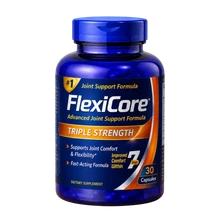
On the amounts. The ingredients publicly listed for FlexiCore are collagen type II, glucosamine, chondroitin and hyaluronic acid. Exact amounts per capsule are not published in the product information currently available. For the most accurate composition and dosage information, check the product packaging or confirm the details with the seller before use.
What the evidence supports
Reviews of collagen peptides report modest improvements in joint discomfort and in how long people can exercise before discomfort begins. Effects are real in the averages and modest in size, with considerable variation between individuals.
What the evidence does not support is regrowing worn cartilage or reversing established osteoarthritis. Anyone promising that is selling a story rather than a supplement.
How long before you know
Trials run eight to twelve weeks. That is the honest window. A structural ingredient works by supplying material over time, and the first fortnight tells you almost nothing.
Frequently asked questions
Is collagen from food enough?
A diet with enough total protein supplies the amino acids collagen is made from. Supplements deliver a concentrated, convenient dose; they are not the only route, and food-first is a reasonable position.
Is collagen suitable for vegetarians?
Collagen is an animal protein — usually bovine, chicken or marine. There is no genuine plant collagen; products marketed that way supply cofactors such as vitamin C, not collagen itself.
How much collagen type II is in FlexiCore?
The amount per capsule is not published in the product information available. Check the pack or ask the seller before you buy if the dose matters to you.
Buying collagen for something other than joints? The collagen guide for Nigeria covers the types, how skin and joint products differ, and how to compare prices per day.
The other three ingredients
- Glucosamine — Glucosamine is the most-studied joint ingredient of the last thirty years, and also the most argued-about. Trials used 1500 mg a day of the sulphate form, results are mixed but not empty, and two groups of people should ask a pharmacist before starting.
- Chondroitin — Chondroitin sulphate holds water in cartilage and is glucosamine’s standard partner in joint formulas. Trials used 800–1200 mg a day, and independent testing has repeatedly found that what is in the bottle does not always match the label.
- Hyaluronic acid — Hyaluronic acid holds water in tissue. In the knee it is part of the fluid that lubricates the joint, which is why doctors inject it there — and why the oral form in a capsule is a genuinely different proposition that deserves a straight explanation.
This page is general information about an ingredient, not advice about your situation. FlexiCore is a food supplement and is not a medicine. If you have a diagnosed joint condition or take prescription medicines, speak to a pharmacist or doctor before starting anything new.
Save 50%
Order FlexiCore in Nigeria
30 capsules per pack · pay the courier on delivery · we call to confirm before dispatch.